MeyerHouse

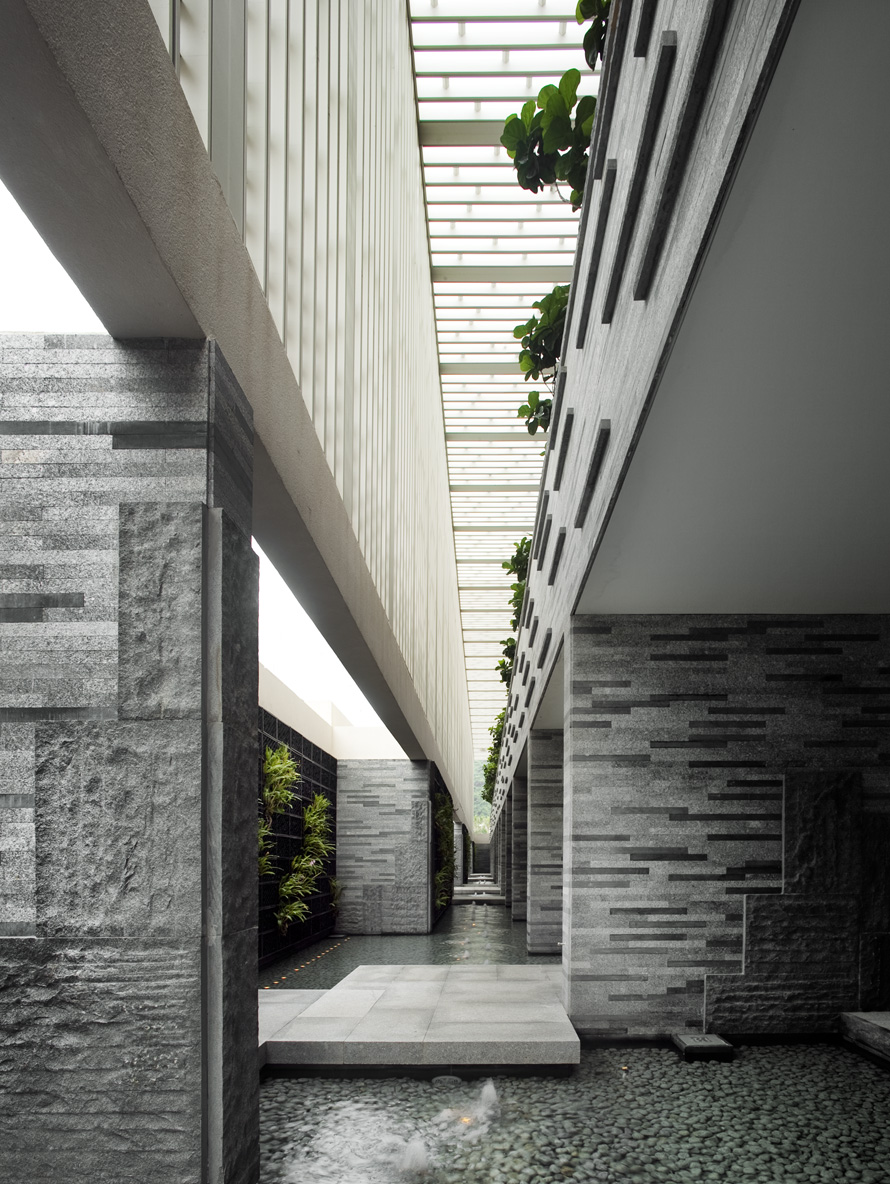
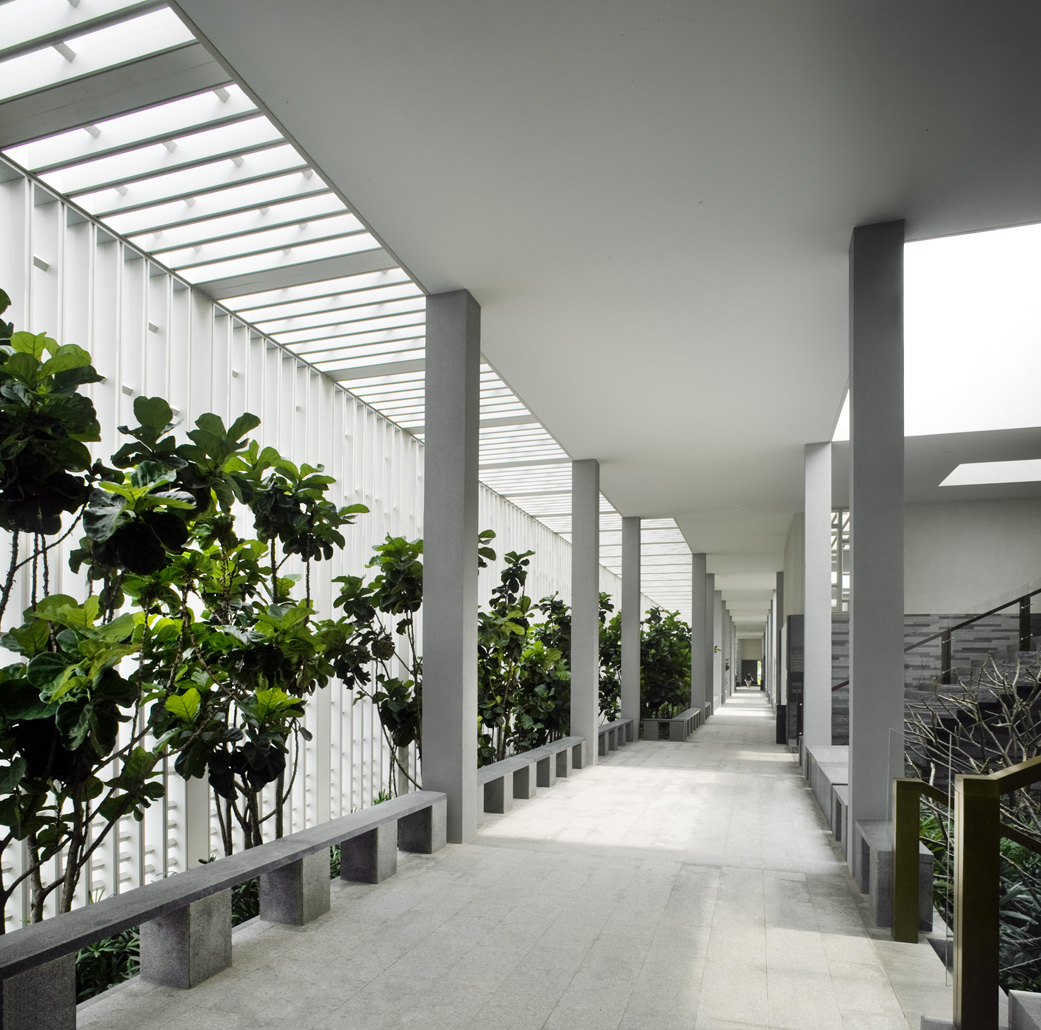
Along Meyer Road, in Singapore’s eastern residential enclaves, sits a condominium development housing 56 dwelling units adjacent to a 1 hectare forested park. The 5-storey with attic development is arrayed in a contiguous ‘C’ configuration with residences looking out onto a 50m by 75m internal forested garden that spills out onto the adjacent park.

Living spaces extend onto large outdoor rooms nestled amongst tall forest trees set amidst a formal English garden. Terracing gardens and water bodies cascade down onto a lower ground arrival level, opening up the subterranean arrival lobbies and facilities to natural daylight, ventilation and greenery.

From street level, the building is scaled to the proportions of a traditional French Chateau with a stately façade of customized louvers and panelling that envelops the entire form. The louvered façade is inclined to secure privacy for units from street level. The façade finishes extend onto the roof, creating an envelope that is sculptural and abstract.

Internally, the forested garden is cocooned by timber blinds that screen the residences imbuing the tranquil garden spaces with warmth and character. Within the garden, a long pool set centrally along the main axial views of the forested park reflect the tall trees and warm facades of the development. The pool is overlooked by guest and entertainment facilities that house a generous dining room, a cosy lounge and outdoor activity decks.

2023

  • Green Good Design Sustainability Awards - Winner

    Awarded by Chicago Atheneum in the Green Architecture category.

Pan Pacific Orchard

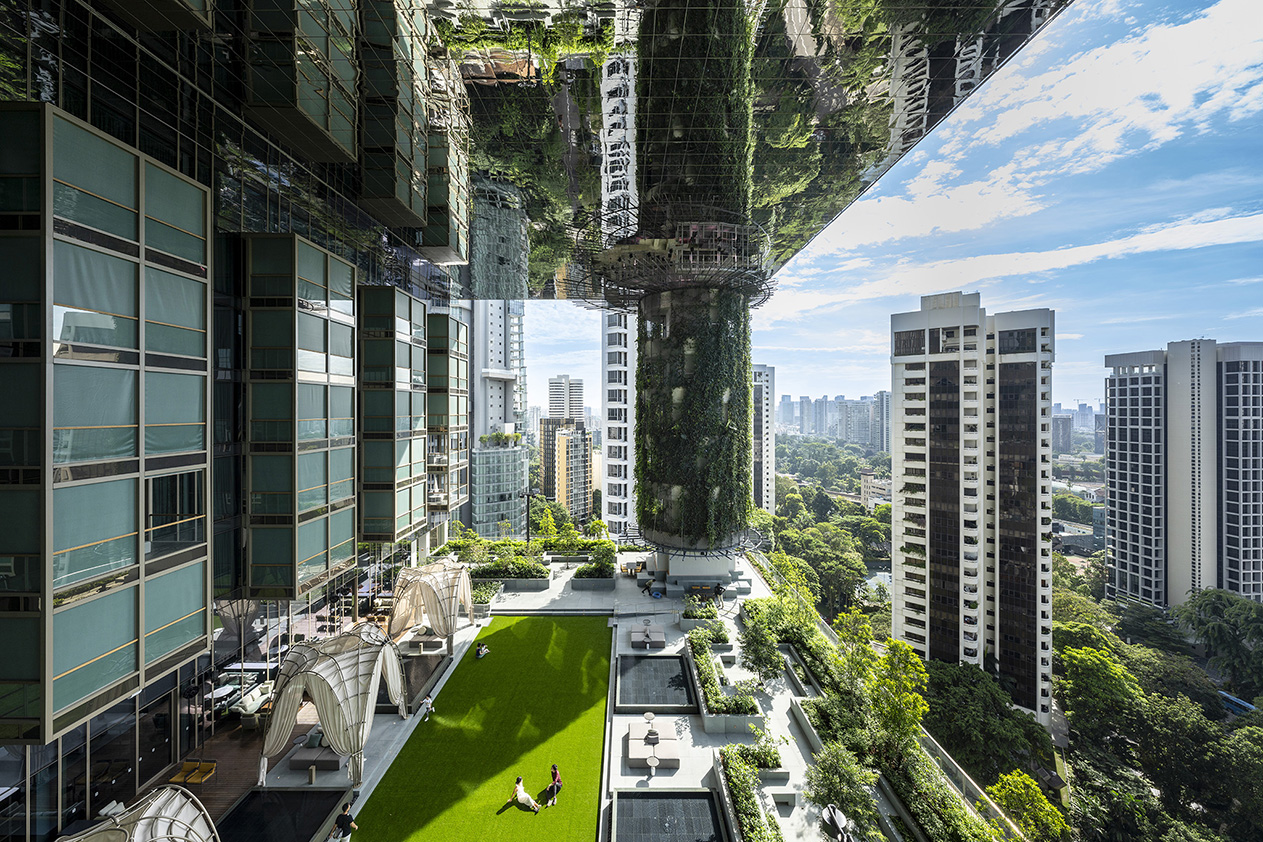
The design of Pan Pacific Orchard envisions a new prototype for high-rise tropical hospitality. This 23-storey 350-room building is a distinctive garden hotel, adding to the green and spectacle along Singapore’s Orchard Road shopping belt.

To overcome the limited site area and to break down the scale, the design stacks 4 distinct strata with 3 Sky Terraces inserted as elevated grounds with amenities surrounded by gardens. The guest rooms are split into 3 stacks configured in L-shaped stacks overlooking either the Sky Terraces or city.

The 1st stratum is designed as a Forest Terrace set between Claymore Road and Claymore Drive with a water plaza and cascades and edged by forest trees, creating a dramatic entrance and a memorable urban connection.

The 2nd stratum is conceived as a Beach Terrace, offering guests a tropical oasis, with meandering sandy beachfront and palm groves around an emerald lagoon, set against Orchard Road.

The 3rd stratum is set up as a Garden Terrace orientated towards the quiet residential estate of Claymore Hill. Flanked by the Bar and Lounge, the Terrace showcases a manicured garden, complete with verandah, lawn, fountains and garden.

The 4th stratum is envisaged as a Cloud Terrace comprising of a 400 seat ballroom and event lawn, surrounded by thin mirror pools and filigree planting, washed by natural light filtering through the PV roof canopy.

The interiors are designed to reinforce the experience of each strata, offering a unique boutique-scale hotel experience. Huge living green columns with creepers visually connects the 4 strata, juxtaposing against the stacked massing and lend the urban hotel with a touch of resort.

Crowne Plaza Changi Airport

Crowne Plaza Airport Hotel, at Terminal 3, Singapore, is designed to create a sensual “time-out” for the exhausted traveller – a quick shot of the steamy tropics, a taste of Singapore, new Asia, 24 hours a day.

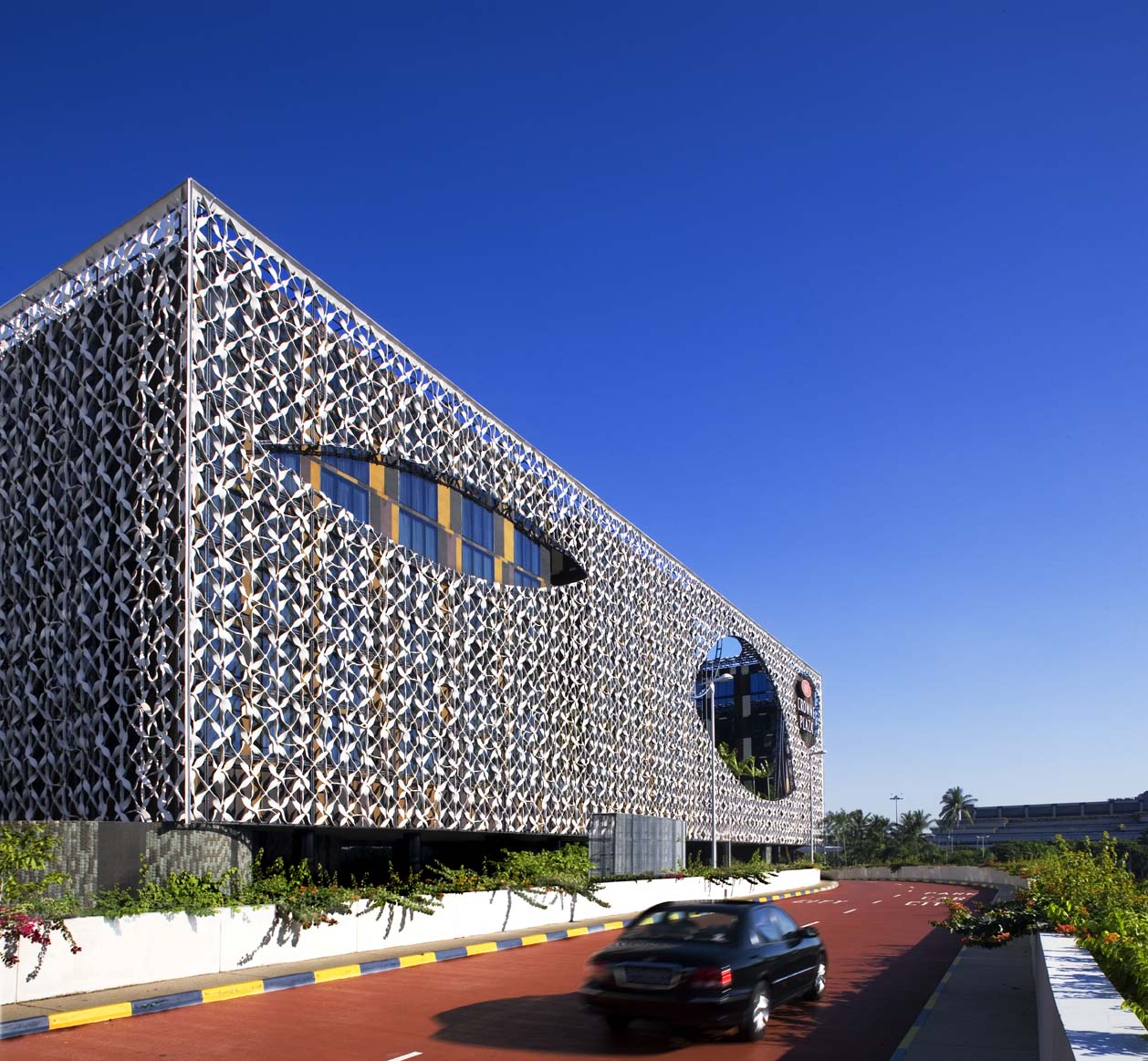
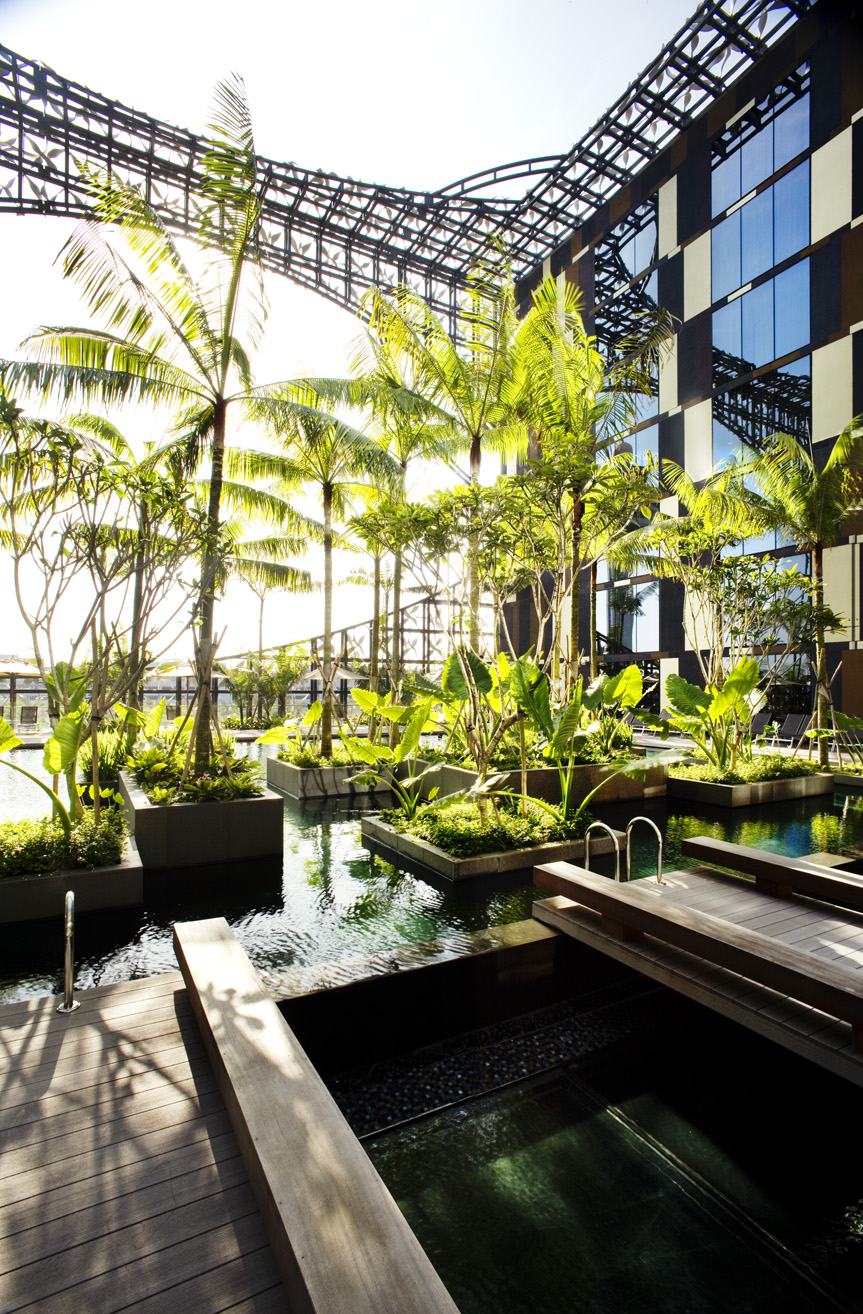
Designed in 2006, the building “floats” on a delicate filigree floral cage that filters and softens the surroundings, filled with tropical vegetation. The guest rooms drift on a carpet of jungle, water, palms, suspended over the tangle of roads. Beneath the carpet the travellers are collected from the departure level, arrival hall and entrance road by sensuously flowing walls, and then gently guided towards service and hospitality spaces wrestled from the left over spaces between the roads.

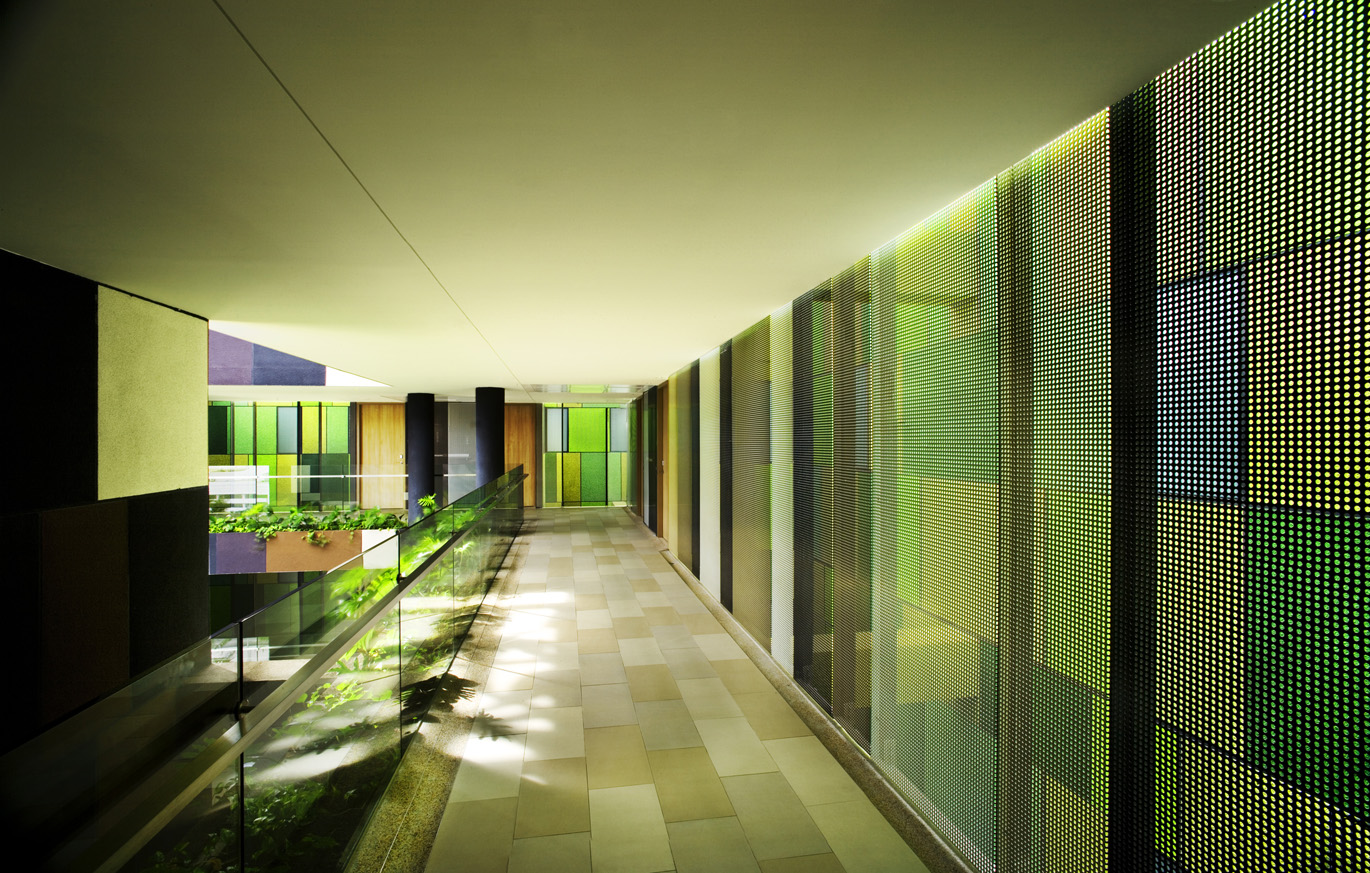
The architecture and interior expression is derived from South-East Asian textiles and tropical jungle. The façade is a 3-dimensional batik fabric that provides 60% shading to the facade. The public areas are wrapped in flowing bands of timber veneer, glazed Thai tiles, Indonesian Batik and Chinese metal mesh. The ballroom is an abstracted forest under a ceiling of raintree canopies in perforated metal. Materials are intentionally rough, sensuous and intense, contrasting in colour, texture and solidity to counteract the blandness of commercial aviation environment.

2009

  • 3rd LIAS Awards for Excellence - Silver Winner

    Awarded by Landscape Industry Association (Singapore)

  • ULI Awards for Excellence: Asia Pacific - Winner

    Awarded by Urban Land Institute

  • Design & Engineering Safety Excellence Awards 2009 - Merit Award

    Commercial Category awarded by Building and Construction Authority

2008

  • Development of the Year 2008 - Winner

    Awarded by Hotel Investment Conference Asia Pacific (HICAP)

  • World's Best Airport Hotels 2008 - Finalist

    Awarded by ForbesTraveler.com

Crowne Plaza Changi Airport Extension

The Crowne Plaza Hotel Extension at Changi Airport is a glimpse into the not-so-distant future of construction, where work and safety conditions are greatly improved, waste is reduced, efficiency is increased significantly – and a ten-storey hotel structure can be built in 26 days. This project is a prototype of the prefabricated prefinished volumetric construction (PPVC) method and proves that this method is the logical next step in the evolution of construction processes, which have remained largely stagnant for the past decades.

The brief called for an extension building consisting solely of guestrooms and back of house necessities. This modular programme made the Crowne Plaza Extension an ideal project to adopt the PPVC method.

The extension adds 243 rooms to the hotel and complements the design of the existing structure, while possessing its own distinctive identity. Its façade was conceived not just in consideration of aesthetics and performance, but also in response to the requirements specific to the airport context.

The PPVC method nearly cut the manpower required to construct the new extension in half – from 75 workers per day, to 45 workers. It significantly reduced the construction duration – by two thirds – needing an average duration of only 3-4 days per floor, compared to 14-21 days when using conventional construction techniques.

The units were pre-fabricated in Shanghai, and all rooms were fitted with carpeting, tiles and all other fixtures found in hotel rooms, before being shipped to Singapore. On site, the units were stacked like Lego blocks with an average of 10 PPVC modules per day.

The interiors are multi-functional with thoughtful touches and a material palette that ties in with the hotel’s urban resort theme, encapsulating the Singaporean identity – tropical, Asian, multi-cultural and welcoming yet cosmopolitan, efficient, and stylish.

48 North Canal Road

The project brief called for a new boutique office and the reconstruction of a pair of heritage-listed shophouses.

As the original floor levels with their low ceiling heights were retained, the frontend of the shophouses was deemed more suitable for meeting rooms, while the service end accommodated a mechanised carpark. The open plan offices within the upper 4 floors was strategically lifted up so that floor plate size is maximised, higher headroom is gained, better views are enjoyed and more natural daylight is accessed from the sides. Every flat roof area is also transformed into roof gardens with the attic featuring the office’s recreational lounge.

The main design strategy was to invert the shophouse typology by carving out valuable floor area to create an externalised, urban, public pocket park at the very heart of the office instead. A café, break-out areas and meeting rooms are organised around this park, enjoying the greenery and light that it brings to the deep plan.

The formal architectural language of fractal, triangulated geometry originated from the need to comply with authority requirements of having splayed corners as the building is bounded by three roads. This inspired a chiselled expression that was carried through in both plan and elevation, taking the form of internal angled walls and external slanted planes, revealing a concave curtain wall like that of crystal embedded in the hollow lower strata of its atrium park space. Shading was also built into the formal language by means of an integrated sun screen within the curtain wall system and a series of perforated aluminium panels

2014

  • Green Good Design Award - Winner

    Awarded by The Chicago Athenaeum and The European Centre for Architecture Art Design and Urban Studies

  • Building of the Year Award - Winner

    Offices category, awarded by ArchDaily

2013

  • URA Architectural Heritage Award - Winner

    Category B – Integrated ‘Old and New’ Developments, awarded by URA

  • World Architecture Festival - Finalist

    Office category, awarded by World Architecture Festival

29 HongKong Street

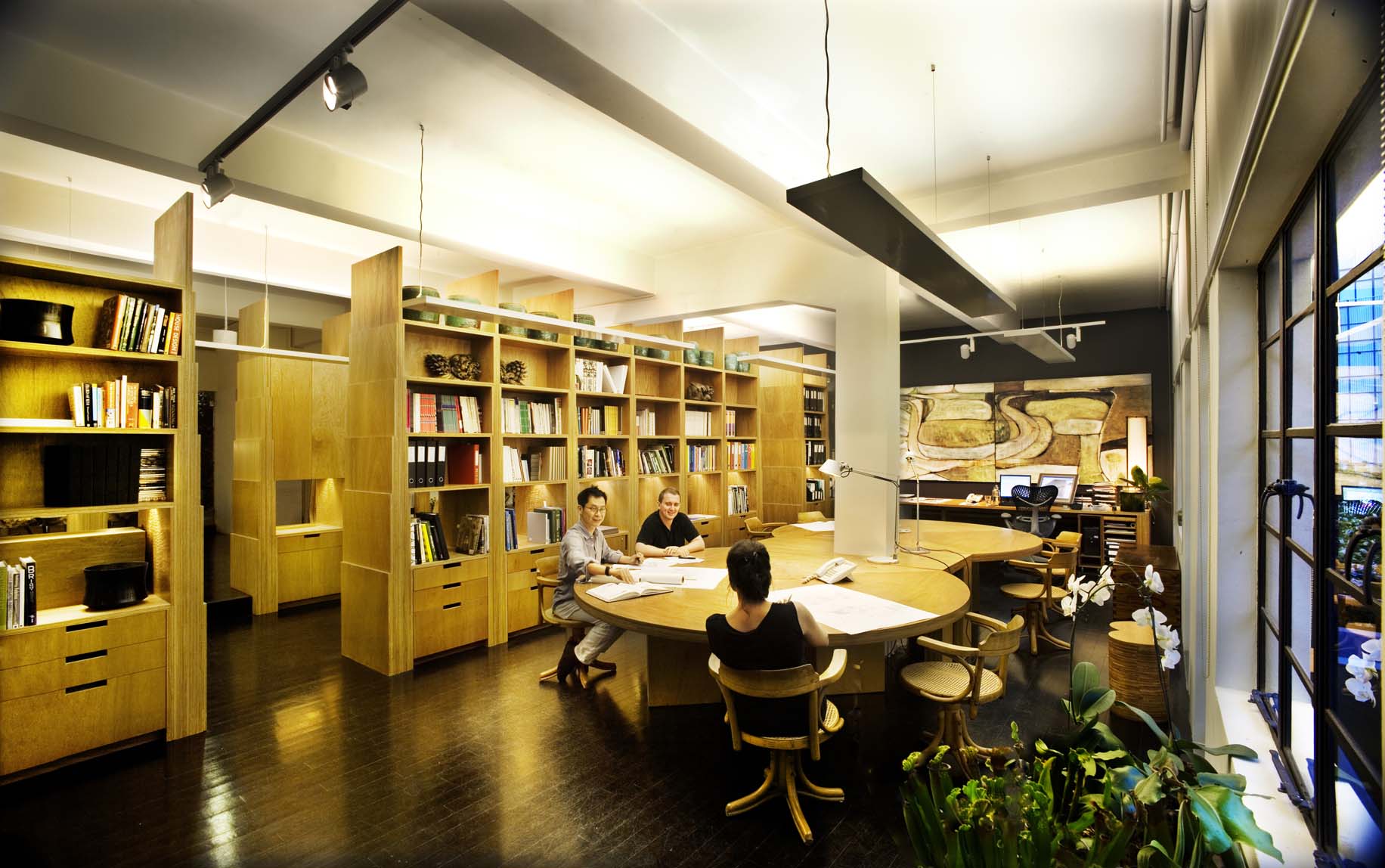
WOHA’s own office in Singapore is housed in a converted shophouse near to the river.

Two adjacent units of the traditional building typology were merged into one to house the office’s growing needs for space. Apart from the more traditional office elements like studios and meeting rooms, 29 HongKong Street also accommodates a gallery (WOHAGA), extensive roof terraces and a fully equipped kitchen and lounge.

While the front facade is protected by conservation guidelines, the more recent extension in the rear allowed more substantial changes. The top floor, previously cramped under a pitch roof, was converted into double-storey loft like space.

The traditional element of the shophouse courtyard was maintained for visual connection between the studios as well as cross ventilation. It also acts as an experimental ground for ongoing research and development of green wall systems.

In the extensive fit-out works on the building’s interior, furniture designs from the old office were developed further, transporting aspects of the familiar environment and its atmosphere to the new location.

InterContinental Sanya Resort

The Intercontinental Sanya Resort is in Sanya, Hainan, China’s tropical island and comprises of a hotel with 350 rooms and related facilities. The hotel stretches from a busy entertainment spine to the natural forest of the rocky point.

One third of the rooms are located in a 10-storey curved linear block that frames the arrival space. Two thirds of the rooms are located in huge water courtyards, and are more resort-like in feel. These rooms are an innovative hybrid of detached villas and room blocks. Each room has a private open air garden bathroom, and a detached cabana that is reached via a bridge or garden. The cabanas sit within the huge watergardens, each a hectare in size.

The design combines masterplanning, landscape, architecture and interiors to set up a series of views and vistas to the sea, framed by coconut trees, reflected in water, and then reframed again with stone, timber and fabric, ensuring every room has a special view. The design of the various public areas varies from urban and formal to casual and beachy, allowing the hotel to address many different markets and customers.

The entire resort is designed as a patchwork of inhabited gardens, giving a foreground  to the views of the owner’s highrise apartments behind. The design is inspired by Chinese screens, palaces and compounds, interpreted in a contemporary fashion. The huge precast concrete screen is an aperiodic mathematical tiling.

The hotel is designed to sustainable principles. Passive energy saving design (large overhangs, natural light, cross-ventilation, shaded courtyards, and planted roofs), use of indigenous seasonal landscape and water conservation and recycling are some of the strategies used.

The Hedberg

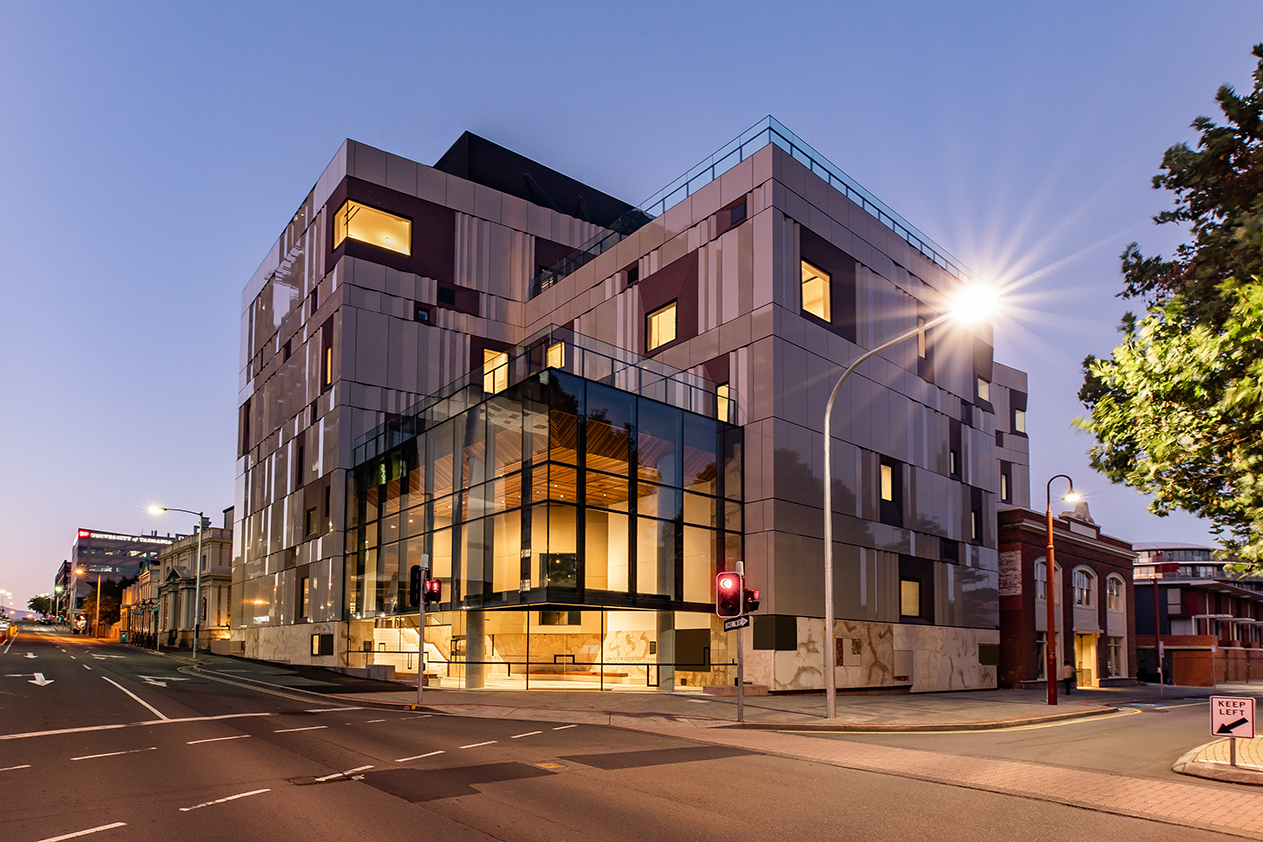
The Hedberg is a new 8000m2 Academy building for the University of Tasmania and the Tasmanian State Government, that brings together Australia’s oldest functioning theatre, the Theatre Royal with a new performing arts centre and the University of Tasmania Conservatorium of Music. Located in the historic, mixed-use, port-side Wapping district of Hobart, Tasmania Australia, the Academy is within walking distance to the city’s water front and historical city center. In addition to the existing 750 seat Theatre Royal, the new development houses 3 new major public performance spaces, a 350 seat recital hall, a 285 seat studio theatre, and a 150 seat salon along with a full array of recording, rehearsal, and practice facilities.

Image Credit: Natasha Mulhall

Huaku Sky Garden

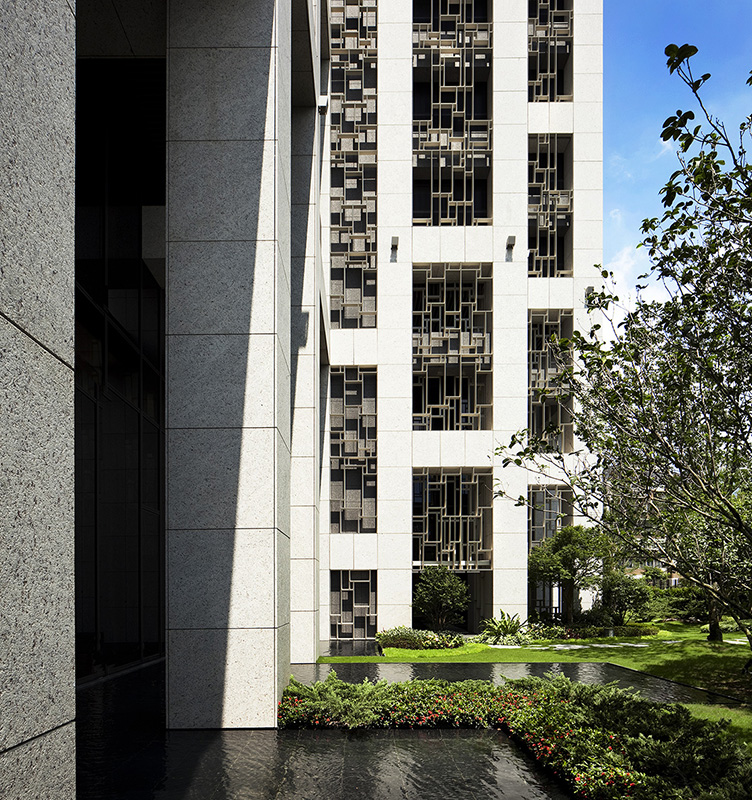
Huaku Sky Garden is located at the base of the foothills of the Yang Ming mountain range, in the Tianmu district of northern Taipei. This project is the only high-rise residential tower in its neighbourhood.

The architecture addresses a very scenic view with rolling mountains as the backdrop and vibrant cities in the foreground. The building is expressed as twin towers in a symmetrical, interlinked form with thick columns. Earthquake and typhoon-proof requirements demanded a strong and symmetrical structural frame, which led to the architectural solution of a Chinese-inspired screen in multiple scales, from the oversized structural frame to the delicate metal filigree.

The façade adapts the rectangular asymmetry of traditional Chinese joinery and screen designs and possesses a delightful abstraction. It is enhanced by the depth of the recessed gardens on the double-volume terraces of each apartment. To ensure privacy between the apartments and to embellish the Yang Ming panorama, the slender east and west elevations are veiled with ornamental screens. The permutation and repetition of simple modules in the ornamental screens of this 38-storey tower not only express the beauty of the building, providing a landmark for the area, but also acts as a sun shade in the hot summer months. As the load is borne by the external walls, the interiors are column-free, spacious and uncluttered – a release from the congested city below.

The interlocking section is designed with three objectives in mind: The first is dual frontage apartments with views of the city and the mountains. The second is natural cross-ventilation, and the third is spatial excitement. The interlocking allows a double-height terrace and entryway despite being a single-level apartment. The double-volume terraces create an outdoor garden quality, underlining the ‘villa on the mountain’ concept and giving the apartments a grand view of the mountains.

In keeping with WOHA’s interest in sociable architecture, the ground level design provides continuity of the street blocks and an appropriate scale in view of the adjacent buildings and surrounding neighbourhood, with gardens, green walls and retail shops that interact with the streetscape.

2019

  • Green Good Design Award - Winner

    Awarded by The Chicago Athenaeum and The European Centre for Architecture Art Design and Urban Studies

2018

  • Good Design Award - Winner

    Awarded by The Chicago Athenaeum and The European Centre for Architecture Art Design and Urban Studies

  • World Architecture Festival - Shortlisted

    Housing, Large Scale – Completed category, awarded by World Architecture Festival

Singapore Institute of Technology

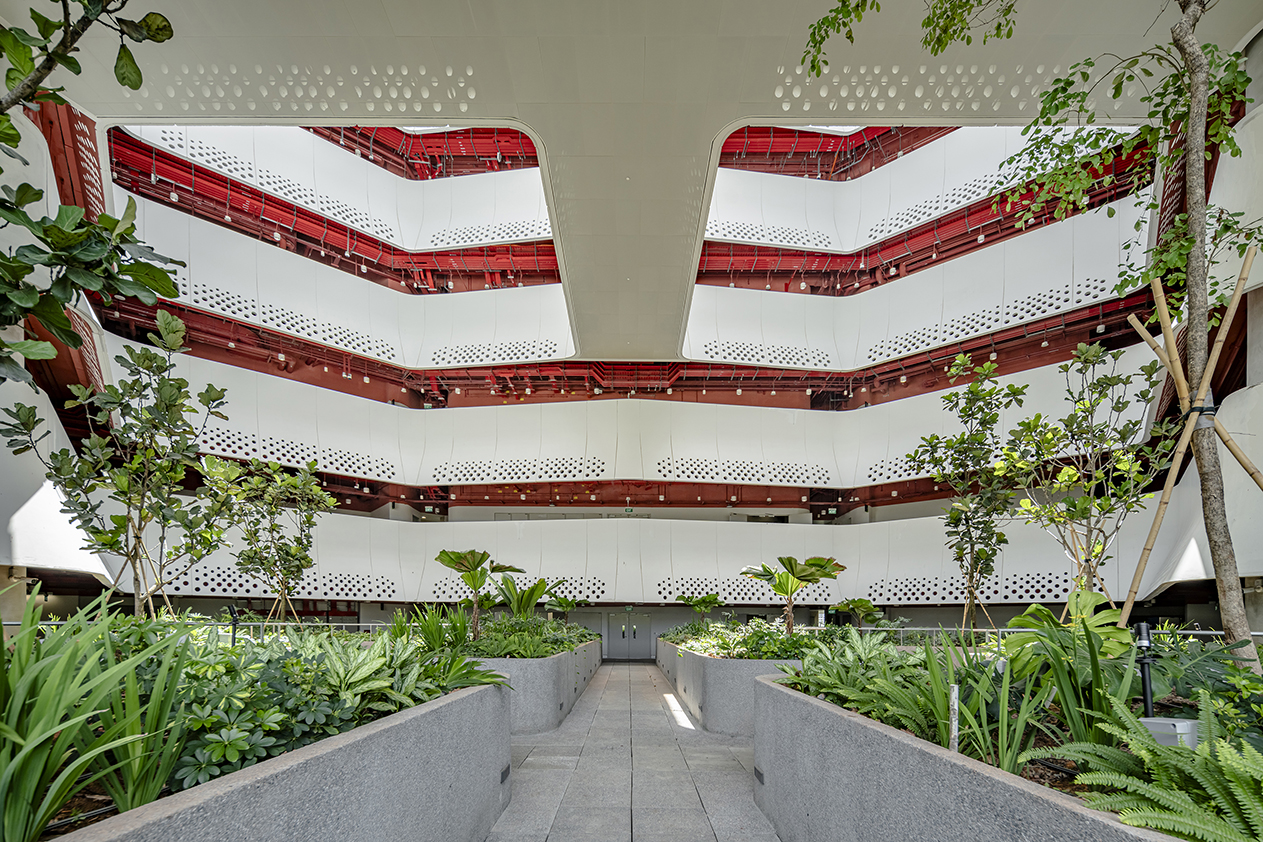
The SIT-Plot 1 campus is uniquely endowed with an existing secondary forest. The design capitalises on this green site asset by integrating its learning environments with biophilic indoor-outdoor tropical spaces. To forge an imageable “Campus-in-a-Park” identity, the academic blocks are organised as a chain of buildings encompassing the central forest courtyard that is transformed into an accessible Community Park. This serves as the heart of SIT, contributing to a strong sense of place that is characterised by memorable nodes for interaction, recreation and rejuvenation.

The design leverages on the site’s undulating terrain by creating two public ground levels that segregate vehicles from pedestrians, creating a people-friendly, car-lite campus. These fenceless, 24/7 publicly accessible ground levels are interconnected across the Punggol Digital District, linking shared carparks and a series of key public spaces.

SIT’s primary signature library building is strategically located at the prime intersection between New Punggol Road and the pedestrianised Campus Boulevard as a prominent urban landmark.

On the rooftops, photovoltaic panels are arrayed as a banner of sustainability over the entire campus. These serve as a key renewable energy source that powers SIT’s Multi-Energy Micro Grid located within Plot 1. Productivity features include precast facades and structural systems for the academic blocks and structural steel for the long span bridges.

Image Credit: Shiya Creative Studio